

Prep time: 5 minutes
Cook time: 15-20 minutes
Total time: 25 minutes
Yield: Approximately 1.5 cups (24 tablespoons)
Category: Sauce, Condiment, Dessert
Cuisine: French-American
Ingredients
Granulated Sugar: 1 cup (200g)
Water: ¼ cup (60ml)
Heavy Cream: ½ cup (120ml), warmed
Unsalted Butter: 6 tablespoons (85g), cut into pieces, at room temperature
Flaky Sea Salt: 1 to 1.5 teaspoons (e.g., Maldon or Fleur de Sel), plus more for sprinkling
Pure Vanilla Extract: 1 teaspoon (optional, for depth)
A Note on Ingredients:
Sugar: Standard granulated sugar is perfect. Do not use brown sugar for this recipe, as the molasses can burn during the high-heat cooking phase.
Cream: Use full-fat heavy cream. The higher the fat content, the richer and more stable your sauce will be. Warming the cream is crucial to prevent the caramel from seizing when the cold liquid is added.
Butter: Unsalted butter is essential. This allows you to control the final salt level.
Salt: Flaky sea salt is preferred for its clean taste and texture. Table salt can be too harsh and iodized.
Equipment
Medium-sized, heavy-bottomed saucepan (stainless steel or light-colored enamel is best for monitoring color)
Whisk
Heatproof spatula or wooden spoon
Glass measuring cup or bowl (for warming cream)
Candy thermometer (optional, but highly recommended for precision)
A clean glass jar with a lid for storage
Instructions: The Step-by-Step Method
Phase 1: The Sugar Melt (Time: 5-8 minutes | Intensity: Medium-High)
Combine Sugar and Water: In your heavy-bottomed saucepan, combine the granulated sugar and water. Stir gently with a whisk or spatula just until the sugar is evenly moistened. It will look like wet sand.
Begin Heating: Place the saucepan over medium-high heat. From this point forward, do not stir. Stirring can splash sugar crystals onto the sides of the pan, which can cause the entire batch to crystallize. Instead, use a pastry brush dipped in water to wash down any sugar crystals that form on the sides of the pan.
The Boil and the Wait: The mixture will come to a boil. It will bubble vigorously as the water evaporates. The color will remain clear for several minutes. This is the phase where patience is key. Let the sugar and water do their work without interference.
Phase 2: The Caramelization (Time: 3-5 minutes | Intensity: High)
Watch for the Color Change: Soon, the clear liquid will begin to turn a pale golden color. This is the start of caramelization. Gently swirl the pan to ensure even coloring. The edges will likely darken first.
Achieve the Perfect Amber: Continue to cook, swirling occasionally, until the caramel is a deep, rich amber color. It should smell nutty and toasted, not burnt. This is the most critical moment; the line between perfect caramel and burnt sugar is very thin. If you are using a thermometer, you are aiming for a temperature between 340°F and 350°F (170°C-175°C). As soon as it reaches this color, act quickly. The residual heat in the pan will continue to cook the caramel, so it’s better to pull it slightly early than a moment too late.
Phase 3: The Sizzle and Cream (Time: 1-2 minutes | Intensity: Medium-Low)
Deglaze with Butter: Immediately remove the pan from the heat. Add the room-temperature butter pieces all at once. The mixture will bubble up violently (this is normal). Whisk constantly but carefully until the butter is completely melted and fully incorporated. The caramel will look glossy and slightly thinner.
Add the Warm Cream: Slowly and carefully pour the warmed heavy cream down the side of the pan. The mixture will bubble up again, more fiercely this time. Whisk continuously to combine. The sauce will hiss and steam—this is the water in the cream reacting with the hot sugar. Keep whisking until the sauce is smooth and uniform.
Phase 4: Seasoning and Cooling (Time: 5-10 minutes | Intensity: Low)
Add Flavor: Remove the pan from the heat. Whisk in the flaky sea salt and the vanilla extract (if using). Taste the sauce carefully (it’s extremely hot!). Adjust the salt to your liking. Remember that the flavor will intensify as it cools.
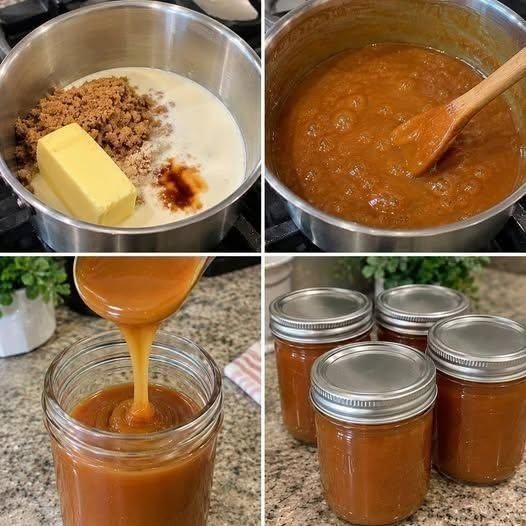
Cool and Store: Pour the hot caramel into a clean glass jar. Allow it to cool at room temperature for about 10-15 minutes before capping. It will thicken significantly as it cools to room temperature. Once cooled, seal the jar and store it in the refrigerator. The sauce will keep for up to one month.
Recipe Notes, Tips & Troubleshooting
Crystallization: If you see grainy crystals forming in your sugar syrup, you can try adding a tablespoon of corn syrup or a few drops of lemon juice at the beginning of the cooking process. These are “interfering agents” that help prevent crystallization.
The “Seize” Factor: If your caramel seizes and turns lumpy when you add the cream, don’t panic. This happens when the liquid is too cold. Simply return the pan to low heat and whisk gently until the lumps melt and the sauce is smooth again.
Safety First: Caramel is incredibly hot (over 300°F / 150°C) and can cause severe burns. Use caution when adding the butter and cream, and keep children and pets away from the kitchen during this process.
Salt Level: The amount of salt is a personal preference. Start with 1 teaspoon, taste, and add more if desired. The type of salt matters—flaky sea salt dissolves beautifully and provides bursts of flavor.
Storage: Keep the sauce in an airtight container in the refrigerator. It will solidify when cold. To use, gently reheat it in the microwave in 10-second increments or in a bowl of warm water, stirring until it reaches a pourable consistency.
Nutrition Information
Serving Size: 1 tablespoon (approx. 15g)
Servings Per Recipe: 24
Calories: 85 kcal
Total Fat: 5g
Saturated Fat: 3g
Cholesterol: 15mg
Sodium: 50mg (will vary based on salt used)
Total Carbohydrates: 9g
Sugars: 9g
Protein: 0g